guide
How AI Pet Portraits Work (And Why Honesty Matters)
By The ArtPixio team · 21 April 2026
If you have ever searched for a custom portrait of your dog or cat, you have probably noticed two kinds of listings: ones that quietly imply a human painted it, and ones that say outright it is made with AI. The price and turnaround usually give the game away. This guide explains, in plain terms, how AI pet portraits actually work — what happens between your phone photo and a finished canvas on the wall — and why being honest about the AI part is not a footnote but the whole point.
What “AI pet portrait” really means
An AI pet portrait is an image generated by a model that has learned, from vast collections of images, what brushstrokes, charcoal smudges, and watercolor washes tend to look like. You give it your pet’s photo plus a style instruction, and it produces a new image in that style. No human is sitting at an easel for hours. That is not a flaw to hide — it is why the result can cost a fraction of a commissioned painting and arrive in days instead of weeks.
The honest framing matters because the dishonest version of this market is everywhere: shops that use AI but stage their marketing to suggest a real artist. When the canvas arrives and a buyer realises the truth, the keepsake is tainted. We would rather you know exactly what you are buying, decide it is wonderful on its own merits, and never feel a flicker of doubt later.
How AI pet portraits work, step by step
Here is the actual pipeline, minus the mystique:
- You upload a photo. Clear, well-lit, and close enough to see the face works best. The model leans heavily on what it can see, so a blurry thumbnail gives it less to work with.
- You pick a style. Each style is a carefully tuned set of instructions behind the scenes. The model treats “oil painting” very differently from “pencil drawing” or “comic book.”
- The model generates a new image. It does not paste filters over your photo. It composes a fresh picture that keeps your pet’s recognizable features — coat color, markings, ear shape, that specific expression — while rendering them in the chosen medium.
- You preview the result. This is the step that separates honest services from gambles. You see your pet as art before any money changes hands.
- You choose a print. Once a preview genuinely looks like them, you select a size and the image is prepared for printing — for larger sizes it is upscaled so it stays crisp.
- It is printed and shipped. A real physical canvas is produced through a print network and sent to your door.
Why the preview-first model is the honest one
Most disappointment with AI portraits comes from paying first and discovering the likeness is off second. ArtPixio is built the other way around: you preview your pet as art and only pay if it truly captures them. That single design choice does more for trust than any amount of marketing copy. It also quietly forces quality — a service that lets you judge before buying has to make the likeness good, because nobody pays for a stranger’s dog wearing their dog’s name.
It is worth being clear about what AI is good and less good at, so your expectations are calibrated:
- Strong: overall likeness, coat color and patterning, mood, and turning a single decent photo into a polished piece.
- Needs your help: tricky details like a specific collar tag, two different-colored eyes, or an unusual marking. A sharper, closer photo improves these dramatically.
- Honest limits: AI is not magic restoration. A dark, grainy, faraway photo limits how faithful the result can be — which is exactly why you should preview before paying.
Getting a portrait that actually looks like your pet
A few practical habits make a real difference:
- Use natural light. A photo near a window beats flash, which flattens fur and washes out color.
- Get the face in frame. Eyes and expression carry the likeness more than anything else.
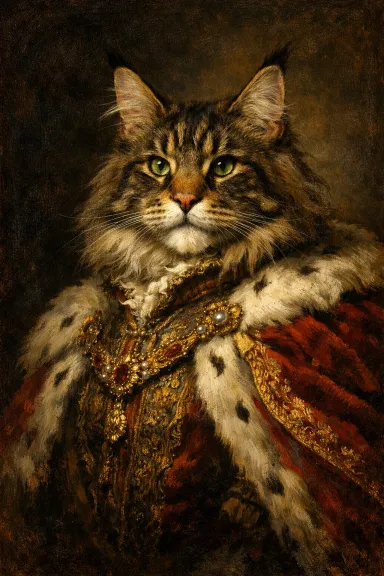
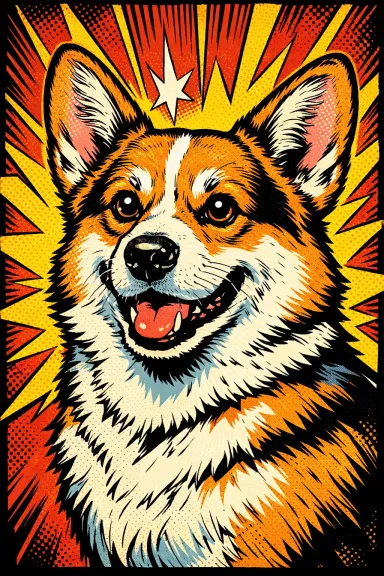
- Match the style to the pet. Bold, high-energy pets suit comic book; serene seniors often shine in watercolor or oil; baroque and regal styles are playful crowd-pleasers. Browse dog portraits and cat portraits for a feel of how each species reads in different mediums.
- Try more than one style. Because previewing is free, there is no penalty for comparing. The “right” style is frequently not the one you expected.
Why a printed keepsake beats a digital file
Plenty of AI tools hand you a download and call it done. A file gets lost in a camera roll. A canvas pet portrait hangs on a wall and becomes part of a home. This matters most in the hardest situation — a pet who has passed. A folder of photos can be hard to open; a single, dignified piece on the wall becomes a place for remembrance. That is the reasoning behind our memorial portraits, and why we treat that use case with care rather than upselling around it. Portraits also make genuinely personal pet gifts, precisely because they are physical and specific to one animal.
Frequently asked
Is an AI pet portrait the same as a hand-painted commission? No, and we will never pretend otherwise. A commission is a human artist working for hours or weeks. An AI portrait is generated by a model in moments. It costs less and arrives faster; the trade-off is that it is not a one-of-a-kind human artwork. For most people who want a beautiful, recognizable keepsake of their pet, that trade is more than worth it.
What if the portrait does not look like my pet? Then you do not pay. The preview exists for exactly this. You can try different photos and different styles until one genuinely captures them, and you only order a printed canvas once you are happy with what you see on screen.
Now that you know how it works, the best next step is simply to try it. Upload a favorite photo, see your pet rendered in a style or two, and judge the likeness with your own eyes — no payment, no pressure. If it looks like them, it is worth printing. If it doesn’t, you have lost nothing but a minute.
See your pet as art – before you pay.
See your pet as art