guide
How to Take the Best Photos of Black Pets
By The ArtPixio team · 8 June 2026
If you’ve ever tried to photograph a black dog or black cat, you’ll know the heartbreak: a gorgeous, glossy pet turns into a flat black blob on screen. It’s not you, and it’s not your phone. It’s a problem with a simple fix.
Why dark coats are tricky
Cameras try to be clever about brightness. When most of the frame is dark, the camera often guesses wrong and underexposes, crushing all that lovely fur into one shapeless silhouette. You lose the texture, the muscle, the shine – everything that makes your pet them.
The good news: a few small changes bring all that detail roaring back.
Use soft, indirect light from the side
Bright but indirect light is ideal – think a big window on a cloudy day, or open shade outdoors. Harsh direct sun creates hard shadows and blown-out hotspots on a shiny coat.
Light coming from the side is your secret weapon. Side lighting skims across the fur and reveals texture and shape, so a black coat reads as fur, not a flat shadow. Front-on light tends to flatten; side light sculpts.
Get a catchlight in the eyes
For a dark-faced pet, the eyes can vanish. The trick is a catchlight – that tiny reflected spark of light in the eye. Position your pet facing a window so the light reflects in their eyes. Suddenly the face has life and depth, and you can actually see where they’re looking.
No catchlight, no sparkle. It’s the single biggest upgrade for a black-pet photo.
Choose a lighter background
Place your pet against something lighter than they are – a cream wall, a pale sofa, a light rug, or bright grass. A black pet on a dark background blends into the murk. A lighter backdrop gives the camera contrast to work with and makes the outline crisp and clear.
Expose up – brighten it on purpose
Here’s the counter-intuitive bit. Tap your pet on the screen to focus, then deliberately raise the exposure (on most phones, slide your finger up after tapping). Make the photo brighter than feels natural. You’re correcting the camera’s instinct to darken everything.
A slightly bright photo with visible coat detail beats a “correctly” dark one every time. You can always tone it down later – you can’t recover detail that was never captured.
A quick checklist for black pets
- Soft, indirect light (cloudy-day window or open shade)
- Light coming from the side, not straight on
- A catchlight reflected in the eyes
- A background lighter than your pet
- Expose up: brighten on purpose
- No flash
Styles that love a dark coat
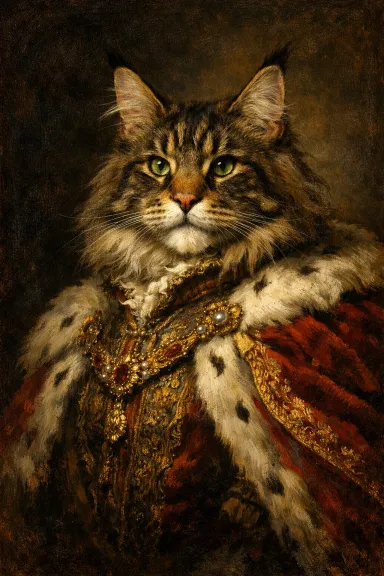
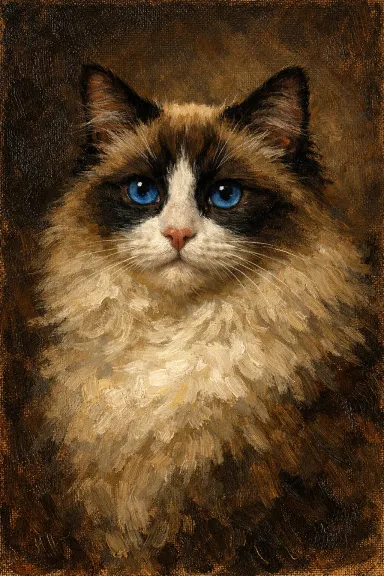
Once you’ve got that detail, some art styles really celebrate it. A charcoal portrait leans into the drama of light and shadow on dark fur, and a rich oil painting gives glossy black coats real depth and sheen.
It works beautifully for inky black dogs and sleek black cats alike. Get the photo right, and your black pet looks every bit as striking on canvas as they do curled up beside you.
See your pet as art – before you pay.
See your pet as art