memorial
What to Write in a Pet Sympathy Card: Messages That Actually Comfort
By The ArtPixio team · 31 May 2026
When someone’s dog, cat, or small companion dies, the hardest part of reaching out is the blank card in your hand. You want to say the right thing, you’re afraid of saying the wrong thing, so you write nothing — and silence is the one message that genuinely hurts. The good news: pet sympathy card messages don’t need to be poetic or clever. They need to be specific and kind. This guide gives you real lines you can copy, adapt, or use as a starting point, plus a few things to avoid.
The simple formula that never fails
Almost every comforting card does three small things: it names the pet, it acknowledges the loss out loud, and it offers something — a memory or your presence. That’s it.
- Name the pet. “I’m so sorry about Biscuit” lands far harder than “sorry for your loss.” Using the name says I saw this animal as a real member of your family, which is exactly what the grieving person needs to hear.
- Acknowledge it plainly. You don’t have to soften it. “This is a real loss and I know how much he meant to you” gives them permission to grieve.
- Offer a memory or yourself. “I’ll always remember how she greeted everyone at the door” or “I’m here whenever you want to talk — or not talk.”
Short messages you can use right now
If you only have room for a line or two:
- “Thinking of you and missing Milo with you. He was so loved.”
- “I’m so sorry. [Pet] was lucky to have a home as full of love as yours.”
- “No more pain, just a lifetime of being adored. Sending you so much love.”
- “Some dogs leave paw prints that never fade. Rex was one of them.”
- “Grieving a pet is real grief. Be gentle with yourself.”
Longer messages for a close friend or family member
When you know the person and the pet well, go specific:
“I keep picturing Luna curled up in that sunny spot by your window. She had the best life because of you — and I know that doesn’t make today any easier. I’m so sorry. I’m just a call away, day or night.”
“Fourteen years is a whole chapter of your life, and Charlie was in every part of it. Walks, road trips, hard days, good ones. It makes sense that this hurts so much. I’m thinking of you and your whole family.”
What to write for specific situations
For a dog: lean into loyalty, walks, and the welcome-home ritual. “He waited at the door for you every single day — that’s a kind of love most people never get.” For a lot of dog owners, the morning walk is where the absence is felt most.
For a cat: lean into quiet companionship. “She chose your lap out of every spot in the house, and that’s no small thing.” Cat grief is often underestimated by others, so naming it matters.
When a child has lost a pet: keep it honest and gentle. “It’s okay to be really sad about Pickles. He was a good hamster and you took such good care of him.”
For a sudden or traumatic loss: don’t try to explain it. “There are no words for how unfair this is. I’m so sorry, and I’m here.” Avoid anything that sounds like a reason.
For an elderly pet who was put to sleep: affirm the decision. “Letting him go was the last, hardest act of love — and you gave it to him. That’s what a good owner does.” Guilt is common here, and your reassurance helps.
What to avoid
- “At least…” anything. “At least she lived a long life” / “at least you can get another one” minimises real pain. Cut it.
- Replacement talk. Don’t suggest getting a new pet in a sympathy card. There’s a time for that, and it isn’t now.
- Comparing griefs. Avoid “I know exactly how you feel.” You don’t, and you don’t need to.
- Over-spiritualising unless you know their beliefs. “Rainbow Bridge” comforts some people deeply and feels hollow to others — match it to the person.
- Vague filler. “Sorry for your loss” alone reads like a form letter. Add the name and one specific thing.
How to sign off
Match the closing to your closeness. For acquaintances: “With sympathy,” “Thinking of you,” or “With care.” For close friends and family: “All my love,” “Holding you close,” or simply “Love, [name].” If you shared the pet — a partner or sibling — “Missing him with you” acknowledges that the grief is shared, not just observed.
A keepsake alongside the card
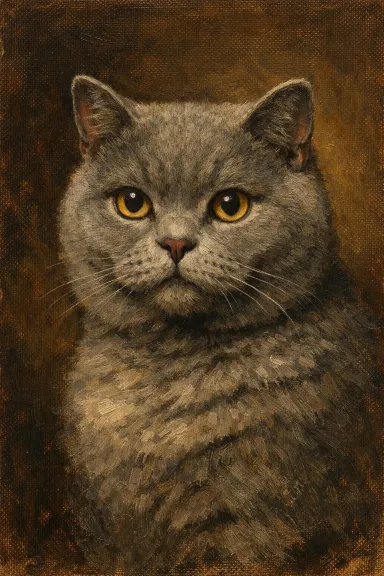
A card says I’m thinking of you today. Some people also want to give something that lasts. A favorite photo turned into a memorial portrait gives the grieving person something to hang on the wall long after the cards come down — a way to keep their companion present rather than only mourned. We’re honest that ArtPixio uses AI to create the artwork — never a hand-painted claim — printed on real canvas and shipped worldwide. It’s a gentle gesture, not a replacement for showing up, and there’s no wrong time to give it. You can also browse softer looks like watercolor or quiet charcoal that suit a memorial mood.
Frequently asked
Is it weird to send a sympathy card for a pet? Not at all. To the person grieving, this was family. A card that takes their loss seriously tends to be one of the kinder things they remember from those weeks — and it’s rarely regretted.
How long after the loss can I send it? Any time. The first week is kind, but a card that arrives a month later, when the casseroles have stopped and the house is quiet, can mean even more.
When you’re ready, and only if it feels right, you can quietly preview a portrait from a favorite photo before deciding anything — no pressure, and no payment just to look.
See your pet as art – before you pay.
See your pet as art